
Arizona payments guide
Is a Cash Discount Program Legal in Arizona?
Yes. Cash discount, dual pricing and credit card surcharge programs are all legal for Phoenix and Tucson businesses, but each one has its own rules, and getting them wrong can cost you your merchant account.
Here’s how the three programs differ, the card network rules you have to follow, and how to set one up on Square or Clover.

Quick answer
The short version
Arizona has no state law banning credit card surcharges or cash discounts. That means the rules that matter are the card networks’ rules. A cash discount or dual pricing program is broadly allowed as long as it’s a real, clearly posted discount. A surcharge is allowed on credit cards only, can’t be more than your actual processing cost or 3%, whichever is lower, and requires notice, signs and a separate line on the receipt. You can never add a fee to debit or prepaid cards.
How they differ
Cash discount vs. dual pricing vs. surcharge
| Cash discount | Dual pricing | Credit card surcharge | |
|---|---|---|---|
| How it works | Your posted price is the card price. Cash payers get a discount. | You show two prices, cash and card, side by side. | Your posted price is the cash price. A fee is added when someone pays by credit card. |
| Example on a $100 sale | Card $100, cash $96.50 | Cash $100, card $103.50 | $100 + 3% = $103 on credit only |
| Applies to debit cards? | Debit pays the card price | Debit pays the card price | No. Debit and prepaid can never be surcharged |
| Cap | No network percentage cap | No network percentage cap | Your cost of acceptance or 3%, whichever is lower |
| Paperwork | Clear signs and pricing | Both prices shown everywhere | 30-day notice to your processor, signs at entry and checkout, receipt line item |
For most Arizona restaurants and shops, dual pricing is the cleanest option: customers see both prices up front, nobody is surprised at the register, and it covers debit cards too. A surcharge is simpler to set up but only covers credit cards, so you’ll still pay full fees on every debit card, which is often half or more of your card sales.
The rules
What the card networks require
For any surcharge
- Credit cards only. Not debit, not prepaid, even if the customer runs a debit card “as credit.”
- Capped at your cost. Visa caps surcharges at the lower of your merchant discount rate or 3%. Mastercard’s cap is 4%, but since nearly everyone accepts both, 3% is the practical limit.
- Give notice first. Visa expects you to notify your processor about 30 days before you start.
- Disclose it. Post signs at your entrance and at checkout, tell customers before they pay, and show the surcharge as its own line on the receipt. Online, show it on the checkout page before the customer enters card details.
For a cash discount or dual pricing
- It has to be a real discount. The posted or menu price must be the card price, and cash must actually cost less.
- Show it everywhere. Menus, shelf tags, signs and receipts should all match the program you’re running.
- Don’t relabel a surcharge. Adding a fee at checkout and calling it a “cash discount” is still a surcharge, and the surcharge rules apply.

Avoid these
Mistakes that get Phoenix and Tucson businesses in trouble
- Surcharging debit cards. This is the most common violation. Your POS needs to tell credit from debit automatically.
- A flat 3.5% or 4% on everything. Over the 3% Visa cap and usually over your actual cost.
- Signs only at the register. Disclosure is required at the entrance too, and before the sale.
- Skipping the notice to your processor. A surcharge program without it isn’t compliant from day one.
- Forgetting customer experience. A surprise fee at the end of a meal costs more in reviews than it saves. Clear, upfront pricing doesn’t.

On your POS
Setting it up on Square or Clover
Square
Square now offers an automatic credit card surcharge in the US. It detects credit cards at checkout, applies your percentage (up to 3%), adds the receipt notice and prints the required signs. It works in the Square Point of Sale, Restaurant and Retail apps and on Square Invoices on the web, with some limits (for example, exchanges are paused while it’s on). Square doesn’t run a built-in dual pricing program, but you can price items to cover card costs. See what Square costs.
Clover
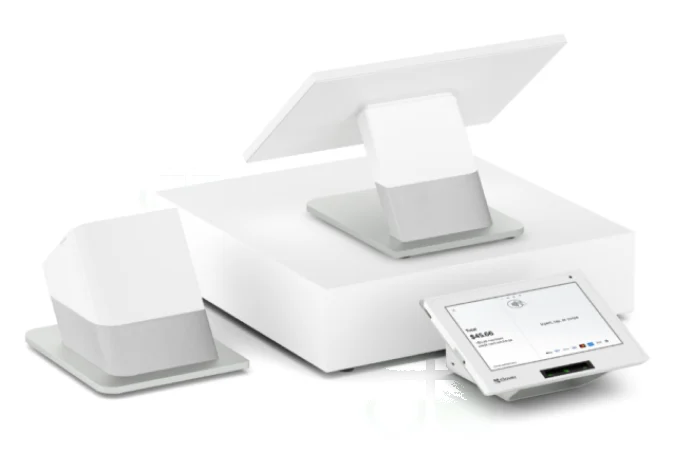
Clover is the stronger fit if you want cash discount or dual pricing. Through a processor like Azura, Clover devices can show both prices, apply the right price at payment and print compliant receipts automatically. That’s one of the main reasons restaurants and high-volume counters choose it. See Clover pricing explained.
This guide is general information, not legal advice. Card network rules change, so confirm current requirements with your processor, and talk to an attorney about your specific situation.
Want to see what a program would save you? Book a free consultation and we’ll run the numbers on your real card mix.
FAQ
Arizona surcharge and cash discount questions
Is credit card surcharging legal in Arizona?
Yes. Arizona has no state law prohibiting credit card surcharges, so businesses can surcharge as long as they follow card network rules: credit cards only, no more than the business’s cost of acceptance or 3%, advance notice to the processor, and clear disclosure at the entrance, at checkout and on the receipt.
Can I charge a fee for debit cards in Arizona?
No. Card network rules prohibit surcharging debit and prepaid cards anywhere in the US, even when a debit card is run as credit. A cash discount or dual pricing program is the compliant way to recover costs on debit transactions.
What is the maximum credit card surcharge in Arizona?
In practice, 3%. Visa caps surcharges at the lower of your actual processing cost or 3%, and Mastercard’s cap is also limited by your cost. Arizona does not set a lower state cap.
What is the difference between a cash discount and a surcharge?
With a cash discount, the posted price is the card price and customers who pay cash get a discount. With a surcharge, the posted price is the cash price and a fee is added when a customer pays by credit card. Surcharges have stricter card network rules.
Is dual pricing legal in Arizona?
Yes. Dual pricing, where you show a cash price and a card price side by side, is treated like a cash discount program. It must be clearly displayed and the card price must be the one charged for all card payments.
Can Square do a surcharge or cash discount?
Square offers an automatic credit card surcharge in the US, capped at 3%. It does not run a built-in dual pricing program. Clover, through a processor, supports cash discount and dual pricing programs.
Sources: Visa U.S. merchant surcharge Q&A · Visa surcharging requirements · Square: apply a surcharge
Better rates and the right setup.
Book a free consultation with a local expert. We’ll review what you pay today and recommend the right setup for your business.
Free consultation
Tell us a little about your business. A local payments expert will reach out to help you choose the right setup.
No cost, no obligation. We never share your information.